

By Dr. Lisa Hilpl, DMD, Owner/Dentist Comfort Care Dental
Imagine visiting your dentist 1,500 years ago and leaving with a beautiful green gemstone embedded in your front tooth. Or having a painful tooth repaired with beeswax instead of the tooth-colored fillings we use today!
Believe it or not, dentistry has a fascinating history stretching back thousands of years. Long before modern dental drills, anesthetics, and composite resins, ancient civilizations were experimenting with everything from precious stones to metals and natural substances to restore, protect, and even decorate their teeth.
Some of these ancient treatments were surprisingly sophisticated. Others make us very grateful for modern dentistry!
1. The Ancient Maya: Jade, Turquoise, and Precious Stones
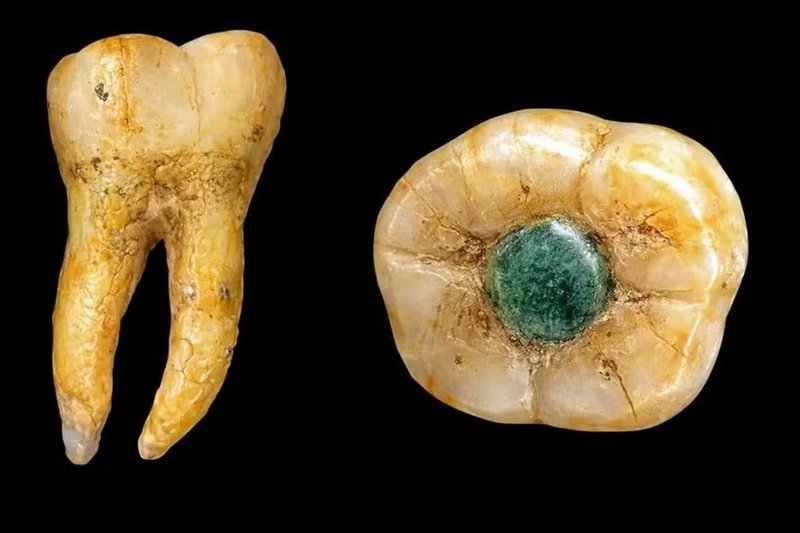
Ancient Maya teeth decorated with carefully fitted gemstone inlays.
More than a thousand years ago, the Maya civilization of Central America developed remarkable techniques for modifying teeth.
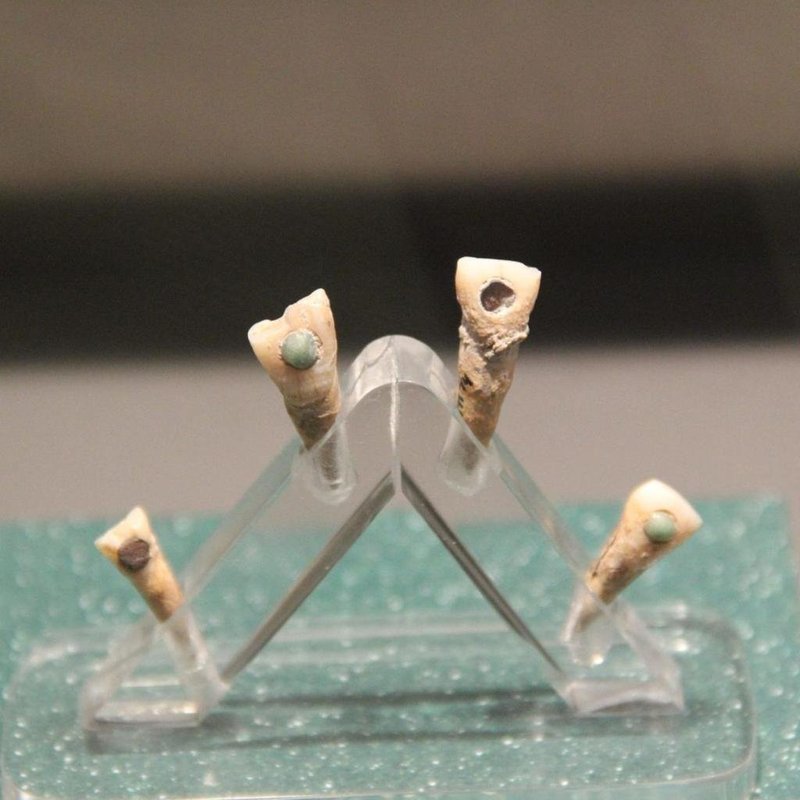
Using primitive drilling instruments and abrasive materials, skilled individuals created small, carefully shaped openings in the enamel of front teeth. Into these openings, they inserted polished gemstones and minerals, including jadeite, turquoise, pyrite (fool's gold), hematite, and obsidian.
But these weren't ordinary fillings.
Most gemstone inlays were placed in otherwise healthy teeth for decorative, cultural, or ceremonial purposes. The stones were held in place using mineral-based cements and natural adhesives. Their precision is extraordinary when you consider the tools available at the time.
Even more interesting, research published in 2026 described a Maya molar containing a jadeite inlay that may have been placed to relieve discomfort or address a dental problem. This raises the possibility that at least some gemstone restorations served a therapeutic purpose.
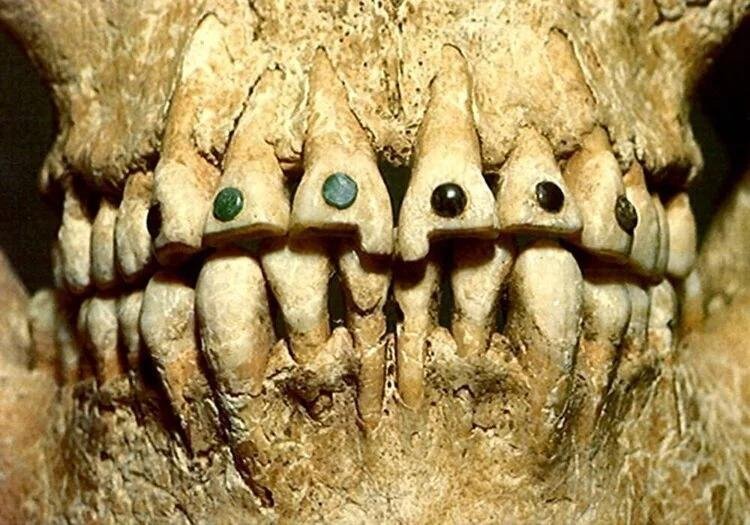
What about opals? Although opals are beautiful gemstones, there is not convincing archaeological evidence that they were routinely used as dental fillings. Jade, turquoise, pyrite, and obsidian are much better documented.
2. Beeswax: One of the Earliest Possible Dental Fillings
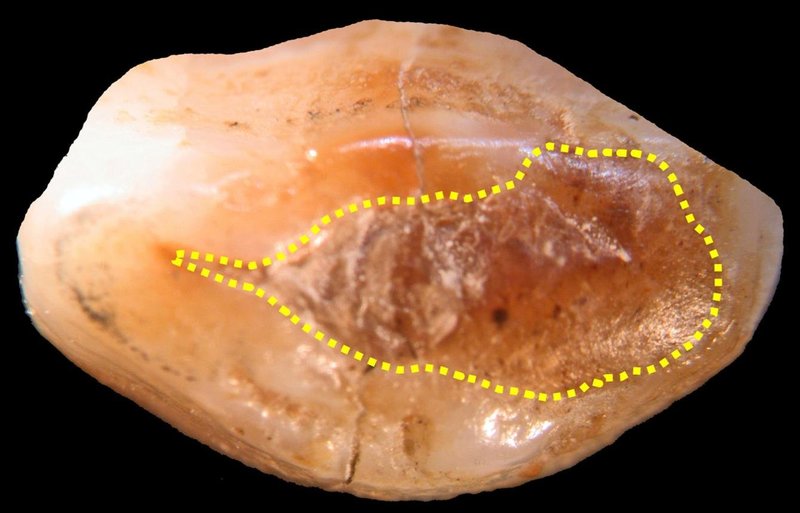
In 2012, researchers studying a 6,500-year-old human jawbone discovered something remarkable: a cracked tooth with traces of beeswax inside it.
The jawbone, discovered in the region of present-day Slovenia, contained a canine tooth with exposed dentin and a vertical crack. Researchers believe the beeswax may have been applied to reduce sensitivity or pain during chewing.
Think of it as an early attempt to seal and protect a damaged tooth!
Researchers cannot establish with certainty that the wax was applied while the individual was alive. Nevertheless, it represents one of the earliest possible examples of a therapeutic dental filling.

3. Ancient Egypt: Honey, Minerals, and Early Tooth Repairs
The ancient Egyptians were surprisingly knowledgeable about oral diseases. Medical writings describe attempts to manage toothaches and dental problems using combinations of natural substances, including honey and mineral ingredients.
Honey was valued in ancient medicine, and some mineral-based mixtures may have been used to soothe or stabilize damaged teeth.
Archaeologists have also identified possible evidence of dental filling procedures in ancient Egyptian remains.
These remedies were far removed from the durable restorations we place today, but they demonstrate that people were actively seeking ways to preserve their teeth thousands of years ago.
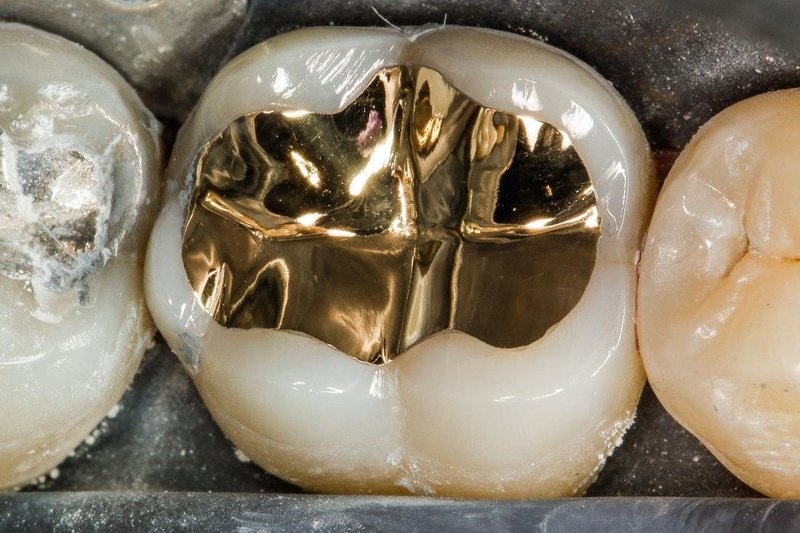
4. Gold: The Precious Metal That Became a Dental Workhorse

Gold has a long history in dentistry, particularly as techniques for making precisely fitted restorations developed.
Why gold?
Gold alloys are durable, resist corrosion, can be shaped with exceptional precision, and tolerate years of chewing forces.
For many years, cast gold fillings, inlays, and crowns were considered some of the finest restorations available.
In fact, properly designed and maintained gold restorations can remain functional for decades.
Gold remains a valuable dental material today, although many patients prefer restorations that blend naturally with the color of their teeth.
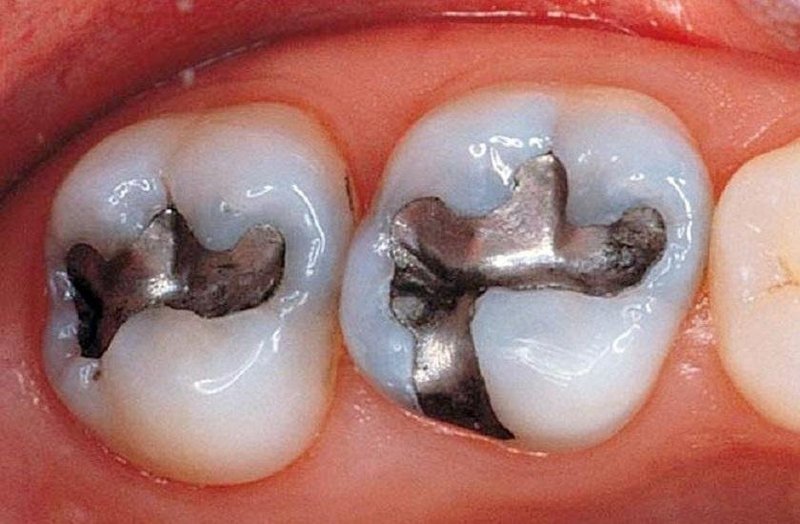
5. Silver Amalgam: The Famous Silver Filling

During the 19th century, silver-colored amalgam fillings became increasingly popular.
Dental amalgam is made from mercury combined with a powdered alloy containing metals such as silver, tin, and copper. The material can be packed into a prepared tooth, shaped, and allowed to harden.
Amalgam was especially popular because it was durable, relatively affordable, and capable of withstanding strong chewing forces.
But amalgam also came with drawbacks. It did not match natural tooth color, often required mechanical retention within the tooth, and contained mercury, leading to ongoing questions about its environmental and health implications.
As dentistry progressed, newer restorative materials offered alternatives that were more aesthetically pleasing and allowed more conservative preparation of tooth structure.
6. Modern Dentistry: Tooth-Colored Composite and Ceramic
Today, our ability to restore teeth is dramatically different from that of our ancient predecessors.
At Comfort Care Dental, modern restorative dentistry focuses on preserving healthy tooth structure while restoring strength, function, comfort, and appearance.
Composite resin fillings combine a resin matrix with tiny inorganic filler particles, often made from silica or glass. These materials can be bonded to natural tooth structure and carefully matched to the shade of surrounding teeth.
Ceramic restorations provide another option, particularly when a tooth needs a larger, stronger restoration. Modern ceramics are engineered for durability, appearance, and biocompatibility.
Unlike ancient gemstone decorations, today's dental materials are designed and tested specifically to perform in the challenging environment of the human mouth.
A Final Thought from Dr. Lisa
What I find fascinating about the history of dental fillings is that our desire to protect and restore teeth hasn't really changed in thousands of years.
The materials certainly have!
From beeswax and jade to gold, silver amalgam, and modern tooth-colored composites, every generation has contributed something to the evolution of dentistry.
And while a beautiful jade gemstone might have been fashionable in ancient Maya society, I think most of us would prefer a comfortable, natural-looking restoration that blends right into our smile!
Thankfully, modern dentistry gives us that opportunity.
Written by Dr. Lisa Hilpl, DMD and Owner of Comfort Care Dental in Mansfield, MA.
Dr. Lisa has more than 22 years of dental experience and is a graduate of Tufts University School of Dental Medicine. At Comfort Care Dental, she and her team combine modern dental technology with a gentle, welcoming approach to help patients maintain healthy, confident smiles.
Comfort Care Dental 10 Reservoir Street, Mansfield, MA 508-851-9300